



How resilient is our energy supply?
The blockade of the Strait of Hormuz shows that carbon fuel dependencies are fragile. Over twenty percent of the world’s petrochemicals normally pass through this single point of failure, along with petrochemical-derived commodities such as fertiliser. This vulnerability has quickly developed into a deeply concerning crisis, in which the well-being of millions of people globally is at risk.
But many countries have already made good choices on energy, and other countries can follow. The UK is one of the countries that has made good choices. So, while the news is bad, we very much believe that it shouldn’t make us fatalistic. Instead, we should look at what is working and build on it.
Britain’s power diversity.
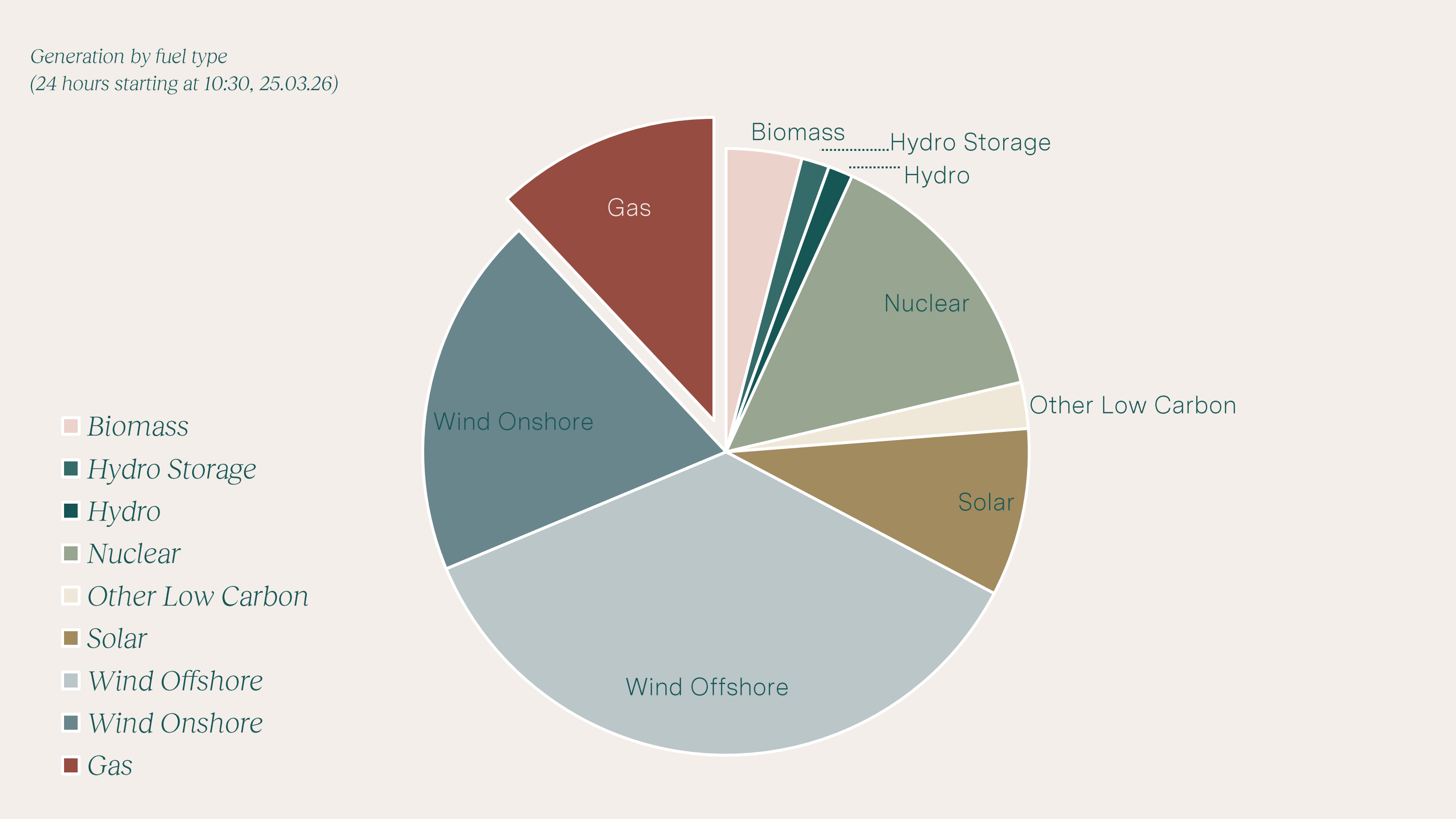
The way we generate electricity in the UK is, in fact, helpfully diverse, with a mix of both renewables and nuclear, and a falling share of gas (now below thirty percent). Some electricity is imported from France, but most of that is nuclear-generated.
The picture is also very dynamic. We tend to think of UK renewables as being about wind, but the largest yet UK solar farm at Cleve Hill, on the north Kent coast, has a capacity of 373 MW, making it power station scale. A further 3.38 GW of large scale solar capacity is in the near term pipeline: this is about the same capacity as the new EPR (European Pressurised Water Reactor), which is slowly approaching completion in Somerset at Hinkley Point C. And solar farms are (a) cheaper and (b) much quicker to conceptualise, approve, and build than new nuclear plants.
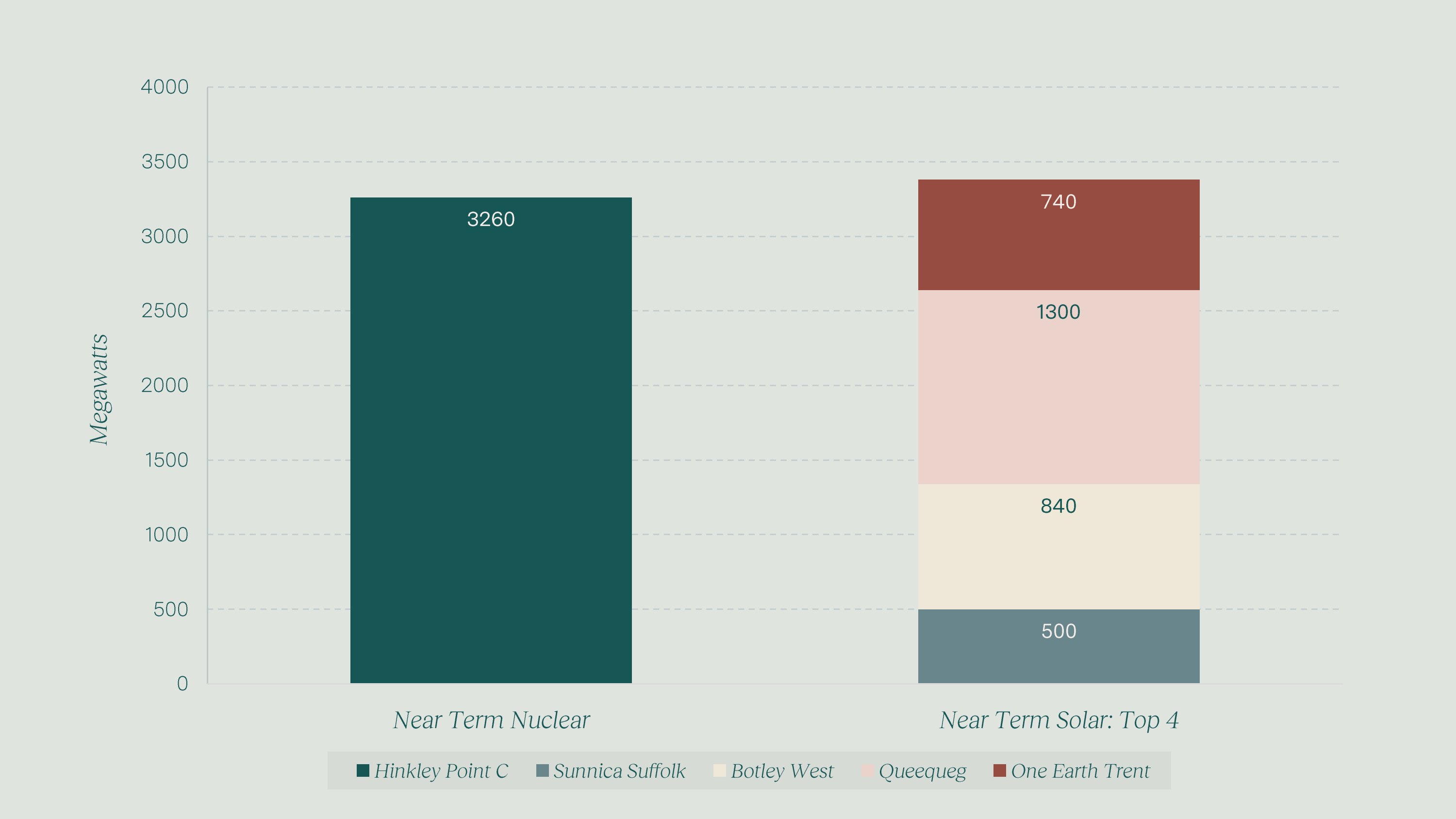
Near term pipeline capacity: nuclear v. solar
On nuclear reactors, the UK has a pipeline of those as well: the same EPR design as Hinkley Point C is being used for Sizewell C in Suffolk, now under early construction, and a new UK domestic design—the Rolls-Royce NMR—is planned for Wylfa in north Wales. The promise of the NMR is that it’s ninety percent factory-built, which could streamline delivery. Possibly that benefit won’t materialise, but the diversity in the UK nuclear strategy alone should contribute to resilience.
The ultimate switch-off date for gas power stations is something still being weighed by the government, but it seems likely that gas will move from being a part of the everyday power generation mix to being back-up only, on a timescale of around a decade. As an illustration of progress, a few days ago—25 March—only twelve percent of the UK’s electricity was generated from carbon fuel (all of it gas).